|
|
2006 Astro-tom.com Astrophotography Winners!Thank you to everyone who participated in the 2006 astro-photo contest! Your participation and comments have taught all of us to take better astro-photos. Every photo submitted represented a LOT of effort and you can be very proud of your work. The photos below stood out to astro-tom.com users and I have received e-mails regarding their composition, resolution, technical difficulty, polar alignment, pinpoint star images and "wow" factor. Since the "Solar System Object" category was not specific enough to cover the photos submitted, I have split out "The Moon" and selected photos from both.
Each person has won the "Undying Gratitude And Admiration Of Your Fellow Astro-tom.com Site Visitors!!"
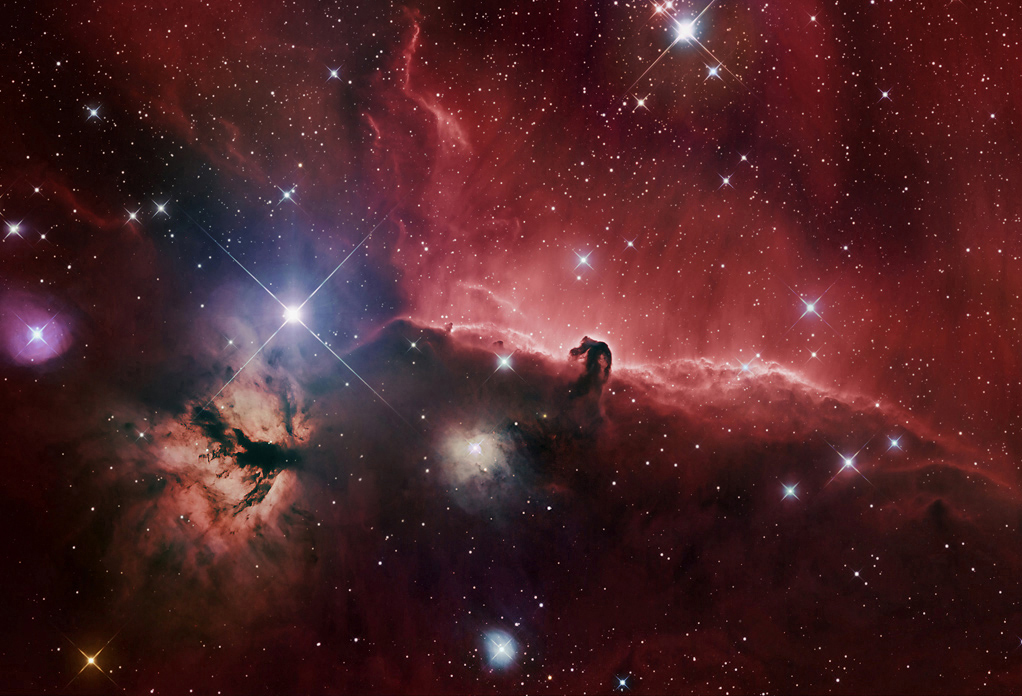
Best Deep Sky ObjectDana Hall From Dana Hall (Summerfield, FL) - December 31, 2006 This is the Horsehead nebula area, taken with a TOA-150 with a spike generator attached. It is an R(L) Ha G B. 200-480-200-200 minutes. 18 hours. Using an STL-11000 camera with Astrodon filters. Thanks, Dana Hall
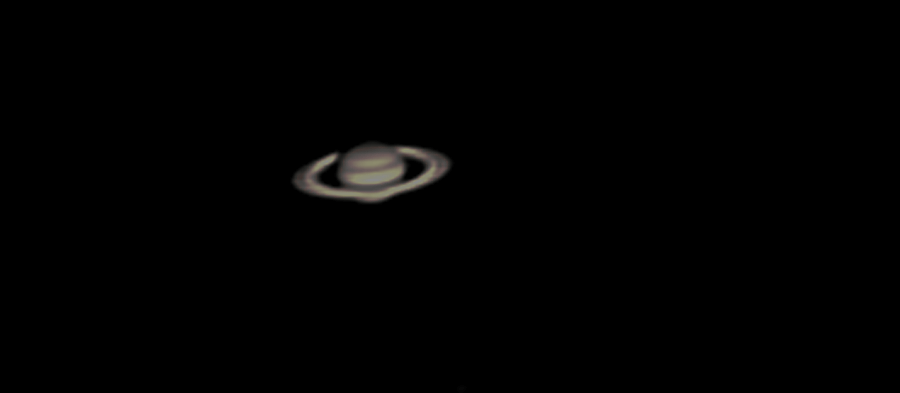
Best Solar System ObjectMarc Simpson
I have a new pic of Saturn. Since I sent the pictures of the Moon and
Saturn we have had a few
decent nights in the UK but not to many. I managed to grab a few hours
to get a new shot of Saturn,
This shot is again taken with my Meade 10" Schmidt-Nnewt on a LXD-55
mount, DSI and a 2X barlow exposure was at 0.112 secs.
I now have a 5x barlow to make more use of the CCD, but need more clear
nights. it would be nice if you could put my new image in comparison to
the old pic. (You
may contact Mr. Simpson here)
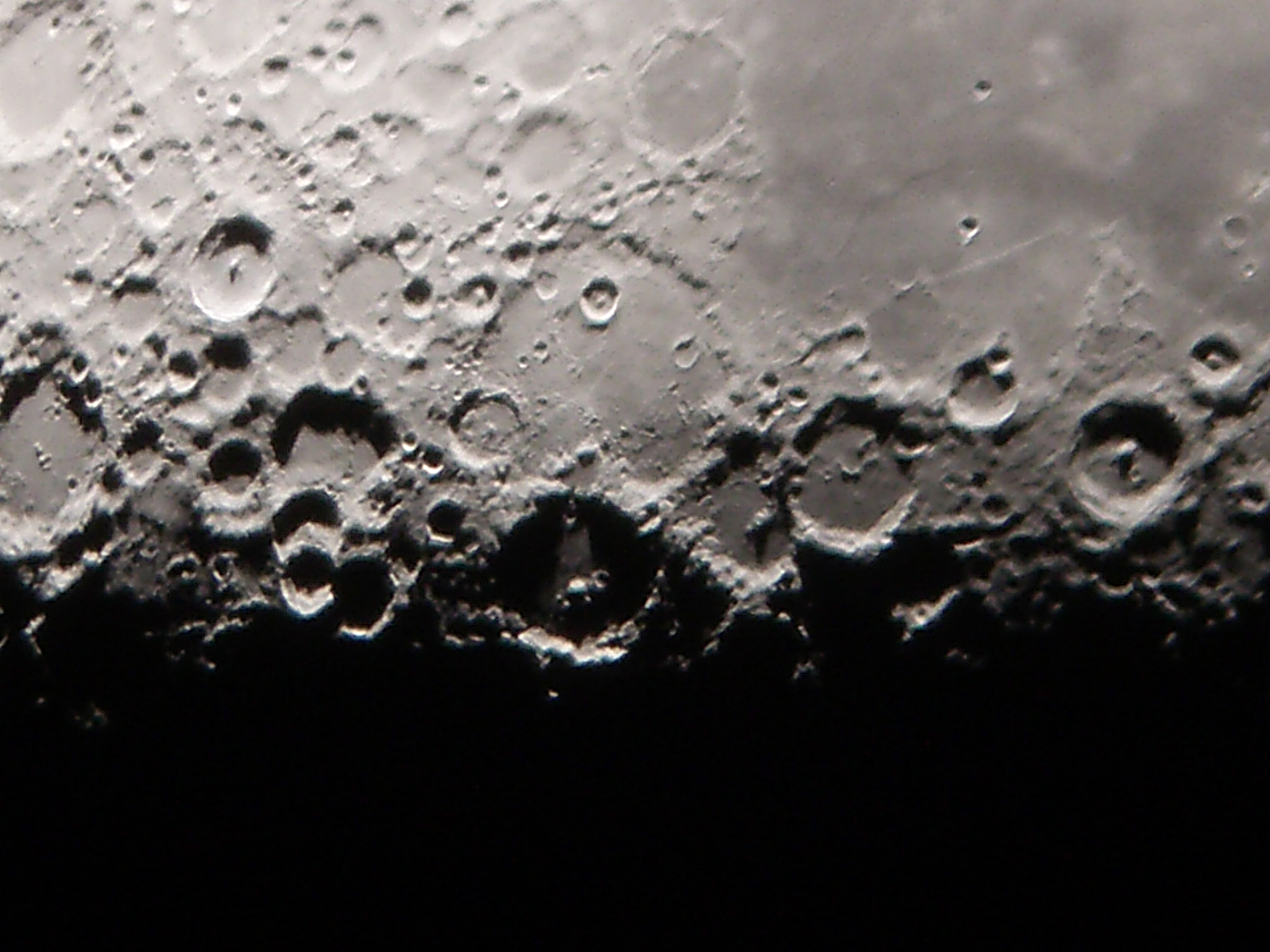
The Moon (Tie - Eric Jacob and Dave Elmes)Eric Jacob From ericjacob613@yahoo.com - December 30, 2006The moon, photographed through a Meade DS2130AT reflector mounted on an alt-az mount. Camera was a Pentax Optio set on auto-exposure, full optical zoom. Setup was afocal, using an Orion Expanse 20mm eyepiece. Photo processed in Photoshop CS. (See much more or Eric's astrophotography at http://www.cheapskate-astro.net
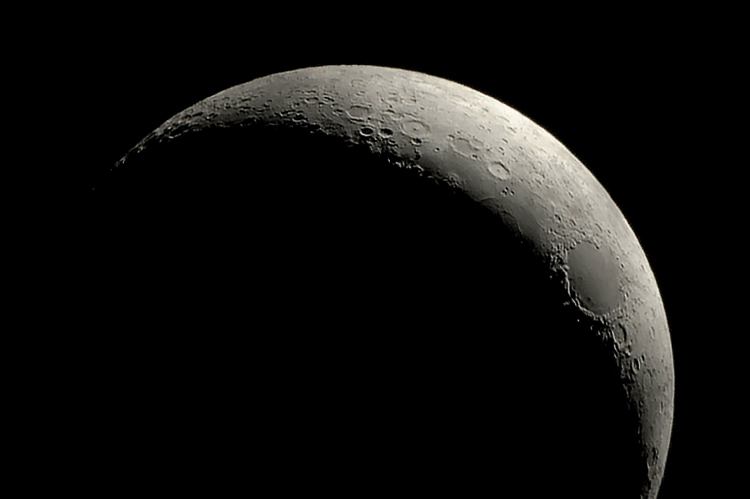
Dave Elmes From Dave Elmes - April 16, 2006The picture is of the moon, taken on the 1st April this year, using my Nikon D50, prime focus on my LX90, the exposure was 1/50th with an iso of 2006. (Contact Dave at dave.elmes@ntlworld.com)
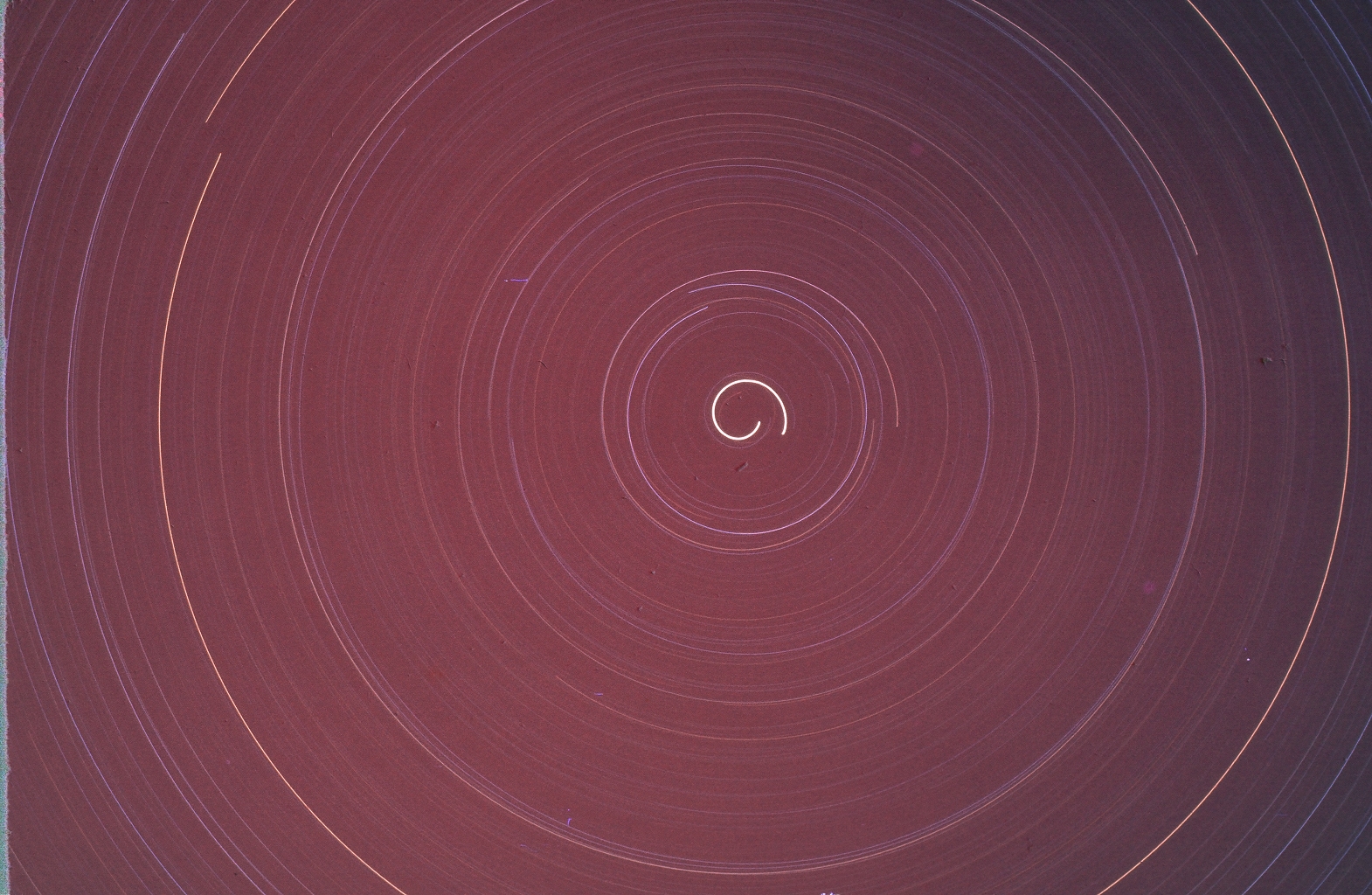
Star TrailsEarl Moser From Earl Moser, Hickman, Nebraska - June 24, 200624 hour star trails? I chose the longest night of the year (Dec. 26th, 1970). I had 11 hours and 58 minutes of total darkness to work with. I rigged up my telescope tripod and drive (no tube or mirror) in my backyard and put 2 feet of the tripod up on kitchen chairs between all the snow drifts. I finally got the telescopes polar axis aligned with the earths axis. But, 180 degrees reversed! My theory was in order to get "24 hours" of star trails I would be able to make 12 hours of darkness work with the drive going opposite of the earths rotation. So now, the telescopes polar axis is turning to the east, the same as the earth. I built a frost shield out of cardboard for the camera lens and attached it. After all was ready, I check the time, I Opened the shutter and went inside. In the morning, I found everything covered with frost! Checking my cardboard tube around the camera lens I found that the last 2 inches next to the lens had been saved from the frost. The frost shield had worked! I checked the time then closed the shutter. With the tripod perched in such a precarious position between the snow drifts I had a slight problem with the polar alignment. However. the results were close enough. The star trails nearly meet after going 360 degrees resulting in the attached image. Earl Moser, Hickman, Nebraska. Submitted by daughter - Leona Barratt, Lincoln, Nebraska. (leona@neb.rr.com)
|
|